VirtualQ
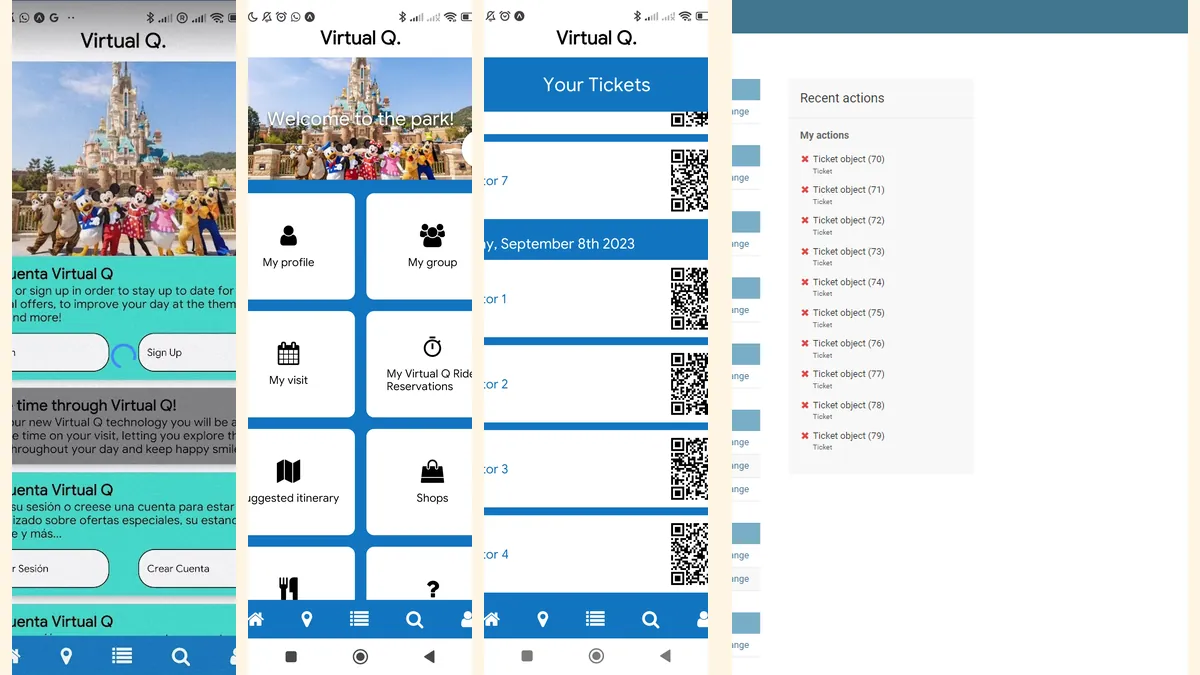
Full-stack theme park ecosystem with virtual queues, real-time park management and a mobile visitor app.
Overview
VirtualQ is a full-stack ecosystem designed to improve the theme park experience for both operators and visitors. It was built as my Computer Engineering thesis at ICAI, scoring 95%.
The system has two main surfaces: a Manager Portal built with Django for park operations, and a User Mobile App built with React Native for visitors.
Manager Portal
The Django-based dashboard gives park operators control over:
- Ride management: configure capacity, status and scheduling for every attraction
- Ticket administration: issue, validate and track tickets across the park
- Queue monitoring: real-time virtual queue status with capacity controls
- Visitor analytics: flow data, peak times and utilisation metrics
User Mobile App
The React Native app (deployed via Expo) is the visitor-facing side:
- Virtual queue booking: join ride queues remotely and get notified when it’s your turn
- Ticket purchasing: buy and manage park tickets from your phone
- Itinerary planning: suggested routes based on current wait times and preferences
- Interactive park map: live overlays showing queue lengths and attraction status
Architecture
Built as a microservice system with Django handling the API layer and SQLite for data persistence. The mobile app communicates via REST endpoints. The virtual queue algorithm accounts for seasonal patterns and time-of-day variations, achieving a 50% reduction in simulated wait times.
What I Learned
Serving two very different user groups with one system forces real design trade-offs. Park managers need data density and control. Visitors need simplicity and speed. Every architectural decision had to balance both.